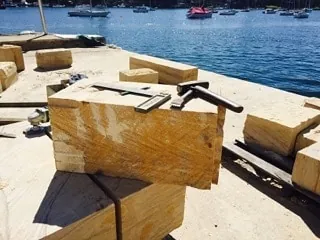
Sandstone Seawall Restoration — Mosman
A Vaucluse waterfront heritage property with a sandstone block seawall in urgent need of restoration. Case study: salt-resistant mortar mix, hand-laid sandstone, and original character preserved.
What was wrong when we arrived
A Vaucluse waterfront property had a 1940s sandstone block seawall that had been repointed with cement mortar in the 1970s. The cement had failed in long runs and the wall was shedding sand.
Three separate sections — each about 4m long — had visible leaning. The wall had moved about 80mm outward at the top across the worst section.
The owners wanted the wall rebuilt without losing the original character. A marine engineer had specified a concrete pile and panel wall, which would have been permanent but would have changed the look of the foreshore.
How we fixed it
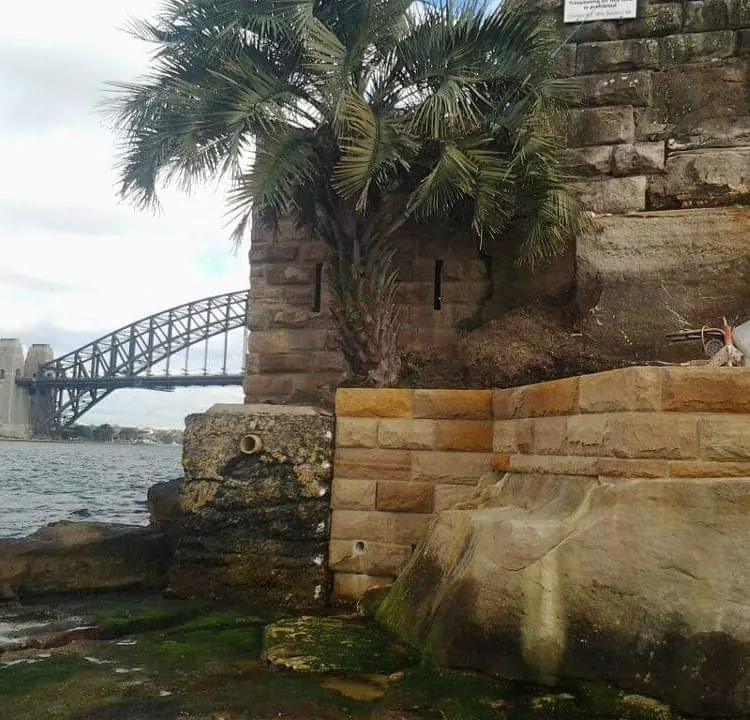
We worked with the same engineer to redesign the repair around the existing sandstone. The piles went in behind the existing wall, not in front of it, so the original face was preserved.
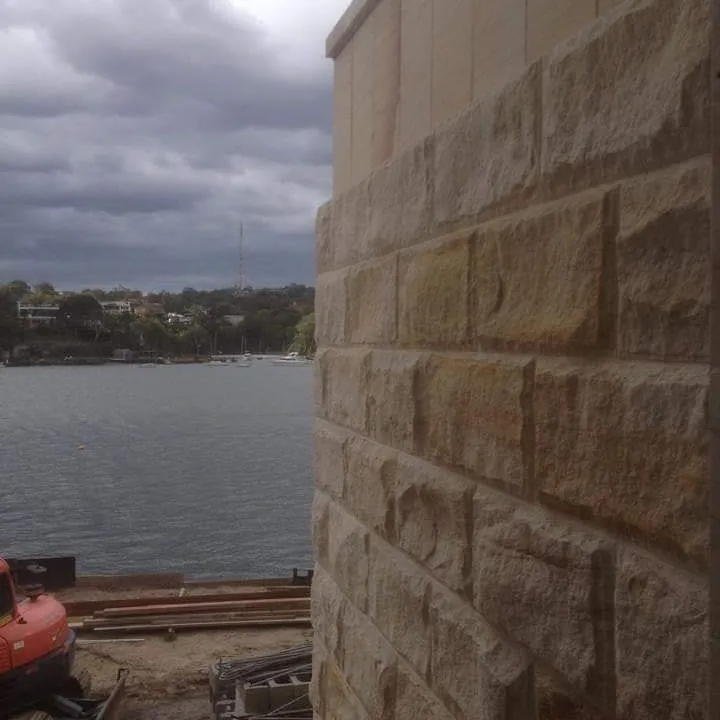
The leaning sections were taken down and rebuilt course by course. About 70% of the original blocks were sound and went back in. The remaining 30% were replaced with hand-dressed Hawkesbury sandstone, matched to the original colour and grain.
Mortar was a hot-lime mix with a small hydraulic component, designed for salt-water exposure. We refused to use any product with Portland cement — it would have failed in two winters.
A new ag-line drain was laid behind the wall and the soil was rebuilt with a geotextile separation layer so the fines did not wash into the drain again.
What the client got
The wall has been through a full winter and a major east coast low event with no movement. The engineer has measured the monitoring points quarterly — zero change.
The foreshore character is preserved. The neighbours have asked for the same spec on their walls.
Cost was about 60% of the concrete pile-and-panel option. The trade-off was a longer construction period (we worked in tidal windows) for a wall that looks like the original.
Questions about sandstone seawall restoration
Can a heritage seawall be repaired with modern engineering behind it?
Yes. We often work with a marine engineer who specifies the structural fix — typically steel piles or a reinforced concrete beam — and we rebuild the sandstone face on the front. The result is a wall with modern structural capacity and a heritage appearance. This is the standard approach on Sydney Harbour foreshore walls.
Why not use cement mortar on a seawall?
Cement is rigid. Sandstone moves with temperature and moisture. The cement mortar cracks, lets salt water in, and the salt crystallises inside the joint and blows the face off the sandstone blocks. Lime mortar moves with the stone and lets the wall breathe. On a seawall, lime mortar will outlast cement by decades.
How do you match replacement sandstone blocks to the existing wall?
We sample the original stone and source from the same kind of quarry. For Sydney Harbour, that is usually Hawkesbury sandstone from a quarry in the Maroota or Hornsby area. The match is rarely perfect on day one, but it fades in within a season of weather and salt spray.
Have a job like this one?
Send a few photos and a short description. Minas calls back the same day with either a quote, a site visit time, or an honest "not our job."